
Buyer’s guide

Best Portable Jump Starter: Top Picks by Engine Size & Use

For most cars, SUVs and gas pickups, the best portable jump starter is a compact lithium pack rated for your engine size, with spark-proof, reverse-polarity-protected clamps. Our best overall pick is the NOCO Boost Plus GB40; for diesel trucks, step up to a pack with a higher diesel rating.

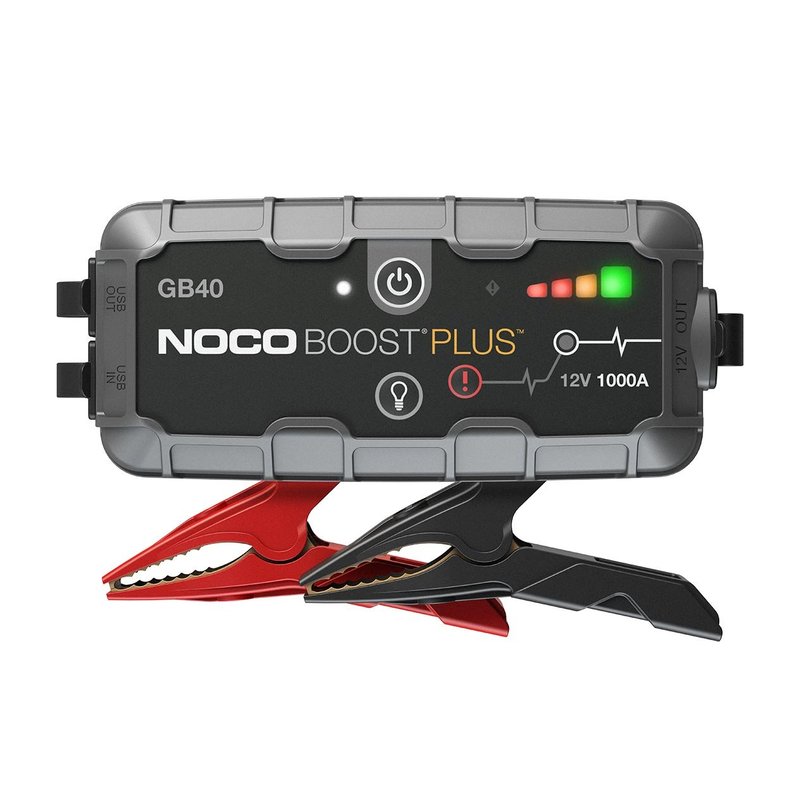
NOCO Boost Plus GB40 jump starter
Our #1 pick

NOCO Boost Plus GB40

Mid-range price range

Engine ratingGas to 6.0L, diesel to 3.0L
BatteryLithium-ion, 24 Wh
ExtrasIP65 (ports closed), USB out, LED light

See ratings & reviews ↗ · All 7 picks

Top picks at a glance

The best portable jump starters, by what you drive

Seven packs that cover how most people actually get stranded: a daily car, a diesel truck, a frozen morning, a bike in the garage. Each one is chosen for a reason, and each card says who should skip it.

Best overall#1
NOCO Boost Plus GB40 jump starter

NOCO Boost Plus GB40

Mid-range price range

Glovebox-sized, rated by NOCO for gas engines to 6.0L, and the model the big review roundups cite most often.

View specs ›
Best value for big engines#2
GOOLOO GT4000S jump starter

GOOLOO GT4000S

Mid-range price range

A brand rating of 12.0L gas and 10.0L diesel at a Mid-range price, with fast 100W USB-C recharging.

View specs ›
Best for heavy-duty diesel#3
NOCO Boost X GBX155 jump starter

NOCO Boost X GBX155

Premium price range

NOCO’s 4,250A pack, rated to 8.0L diesel, for 6.7L-class pickups, farm and fleet use.

View specs ›
Best with air compressor#4
WOLFBOX MegaVolt16 Air jump starter

WOLFBOX MegaVolt16 Air

Mid-range price range

A pack rated to 8L gas plus a 160 PSI inflator that stops at the pressure you set.

View specs ›
Best for cold weather#5
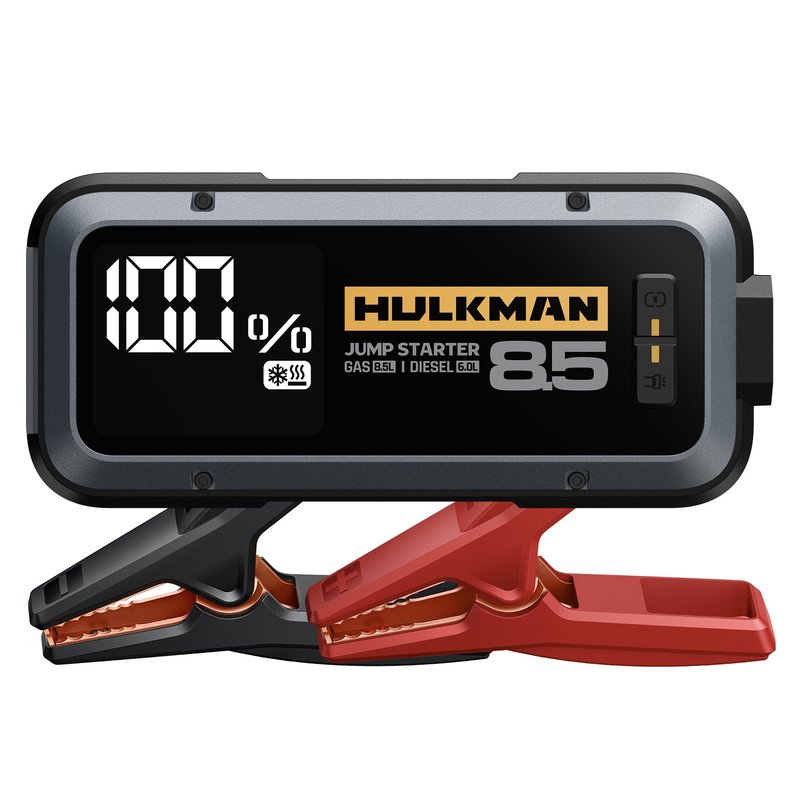
HULKMAN Alpha 85S jump starter

HULKMAN Alpha 85S

Premium price range

A pre-heat step that warms the pack before a cold start, for winters that sit below zero.

View specs ›
Best for motorcycles & small engines#6
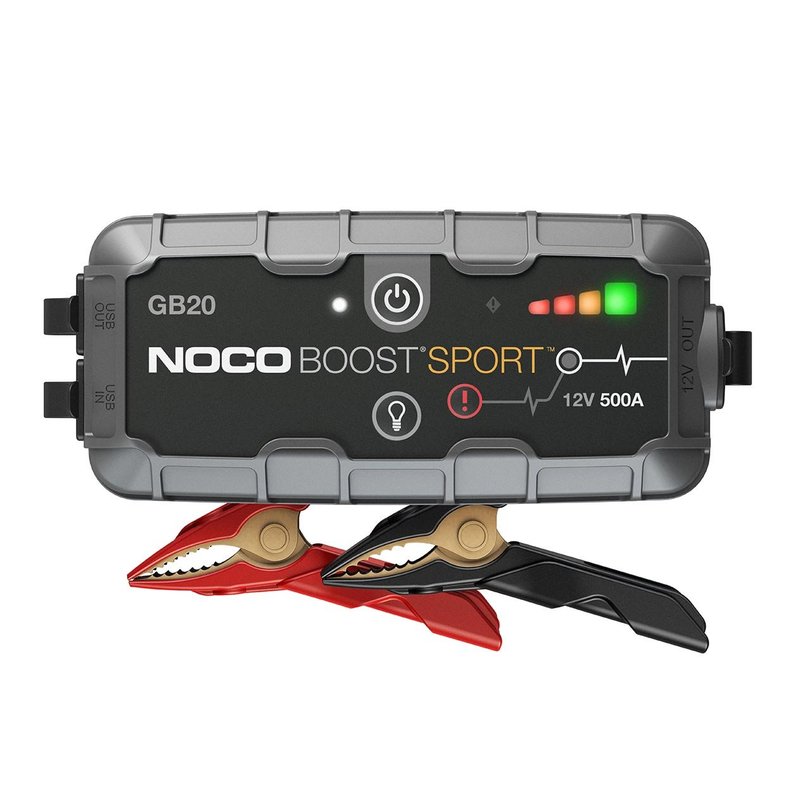
NOCO Boost Sport GB20 jump starter

NOCO Boost Sport GB20

Budget price range

NOCO’s smallest Boost: rated to 4.0L gas, about 2.1 lb, sized for bikes, ATVs and mowers.

View specs ›
Best for the money#7
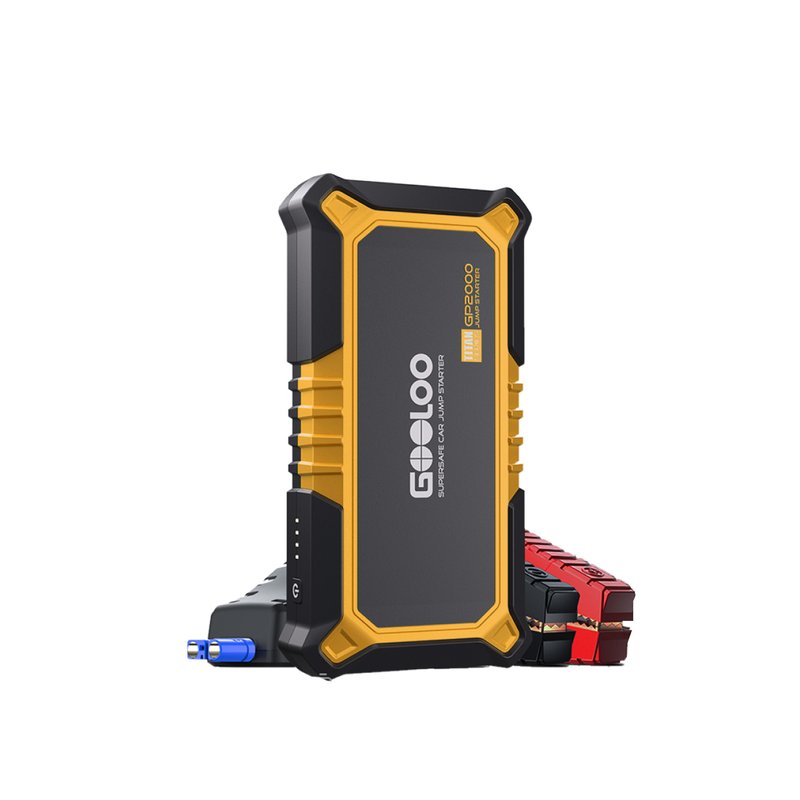
GOOLOO GP2000 jump starter

GOOLOO GP2000

Budget price range

A Budget-tier pack that GOOLOO rates for 8.0L gas and 6.0L diesel, at about 1.2 lb.

View specs ›

Prices change often, so we show a price range instead of a number. Budget is under $90, Mid-range $90–$200, Premium over $200, based on typical list prices.

Find your match

Start from your vehicle, not the amp number

The right pack depends on the engine, the weather and what else you want it to do. Pick the line that sounds most like you.

NOCO Boost Plus GB40 jump starter

A daily car or small SUV

Start with

NOCO Boost Plus GB40

Most four- and six-cylinder cars and crossovers sit well inside a 6-liter gas rating. A compact pack you will actually keep in the car beats a giant one left in the garage.

NOCO Boost X GBX155 jump starter

A diesel pickup or a big V8

Start with

NOCO Boost X GBX155

Diesels need more cranking power and many carry two batteries. Look at the brand’s diesel rating, not the peak-amp headline.

WOLFBOX MegaVolt16 Air jump starter

I want a tire inflator too

Start with

WOLFBOX MegaVolt16 Air

A combo pack covers a dead battery and a low tire with one box. The trade-off is a bigger pack and a slower inflator than a standalone one.

HULKMAN Alpha 85S jump starter

Winters below freezing

Start with

HULKMAN Alpha 85S

AAA says a car battery loses about 60% of its strength at 0°F, and lithium packs lose output in the cold too. Choose by the stated low-temperature limit.

NOCO Boost Sport GB20 jump starter

A motorcycle, mower or boat

Start with

NOCO Boost Sport GB20

Small 12V batteries need a small, well-protected pack. On the water, an IP65 rating and attached cables matter more than amps.

NOCO Boost Plus GB40 jump starter

A hybrid or an EV

Start with

NOCO Boost Plus GB40

Hybrids and EVs use a separate 12V battery to wake the car. Check its type first: NOCO lists the GB40 for 12V lead-acid batteries, while Tesla’s Model Y manual describes a lithium-ion low-voltage battery.

Our picks in detail

What each jump starter does well, and who should skip it

Engine ratings, amps and capacities are each brand’s own figures; third-party test results are credited by name. We did not bench-test these units. How we pick.

Best overall#1

NOCO Boost Plus GB40

The GB40 is the jump starter most of the big review roundups keep coming back to: The Drive names it best overall, Outdoor Life its best all-weather pick and Car and Driver its most compact. It is small enough for a glovebox, and NOCO rates it for gas engines up to 6.0 liters, which covers most cars, crossovers and many V8 SUVs.

Why it stands out

  • NOCO rates it at 1,000 peak amps for gas engines to 6.0L and diesel to 3.0L, with up to 20 jump starts per charge (brand figures).
  • Spark-proof clamps and reverse-polarity protection: if you mix up the clamps, an error light shows and it will not boost (per NOCO’s user guide).
  • IP65 with the ports closed, a built-in LED light and a USB output for charging a phone.
Engine ratingGas to 6.0L, diesel to 3.0L
Peak amps1,000A (brand-stated)
BatteryLithium-ion, 24 Wh
Weight2.45 lb
ExtrasIP65 (ports closed), USB out, LED light

Good fit if

  • You drive a car, small SUV or gas pickup up to about 6 liters.
  • You want something that lives in the glovebox or door pocket.
  • You value a brand with a long track record over the biggest amp number.

Skip it if

  • You drive a diesel bigger than 3.0L — look at the GB70 or GBX155.
  • You want a pack that doubles as a large power bank — at 24 Wh it is small.

Car and Driver found the 24 Wh battery is the GB40’s trade-off: one jump used a noticeable share of its charge. Top it up after every use.

Best value for big engines#2

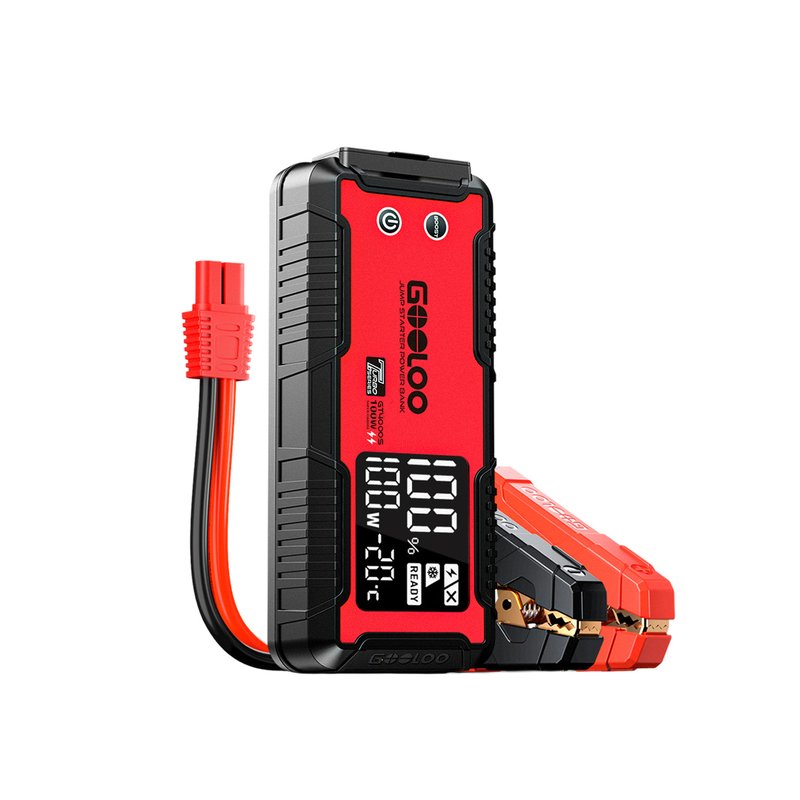
GOOLOO GT4000S

GOOLOO’s GT4000S is the value route to big-engine ratings. GOOLOO lists it for gas engines up to 12.0 liters and diesel up to 10.0 liters at a Mid-range price, and Outdoor Life names it best for diesel trucks. It recharges quickly over a 100W two-way USB-C port, and it has a screen that shows the remaining charge.

Why it stands out

  • GOOLOO rates it at 4,000 peak amps for gas to 12.0L and diesel to 10.0L (brand-stated).
  • 100W two-way USB-C: GOOLOO says a full recharge takes about 1.2 hours.
  • IP65, an LCD screen and GOOLOO’s warranty of up to 30 months.
Engine ratingGas to 12.0L, diesel to 10.0L
Peak amps4,000A (brand-stated)
BatteryLithium polymer
WeightNot listed by brand
ExtrasIP65, 100W two-way USB-C, LCD screen

Good fit if

  • You drive a diesel pickup and want a high rating without a Premium price.
  • You like seeing the exact charge level instead of four LEDs.

Skip it if

  • You want the longest-established brand — NOCO has the longer review history.
  • You need it to be compact — the GB40 is smaller.

Some Amazon listings for this product show the older GT4000 name. Check that the listing title says GT4000S before you buy.

Best for heavy-duty diesel#3

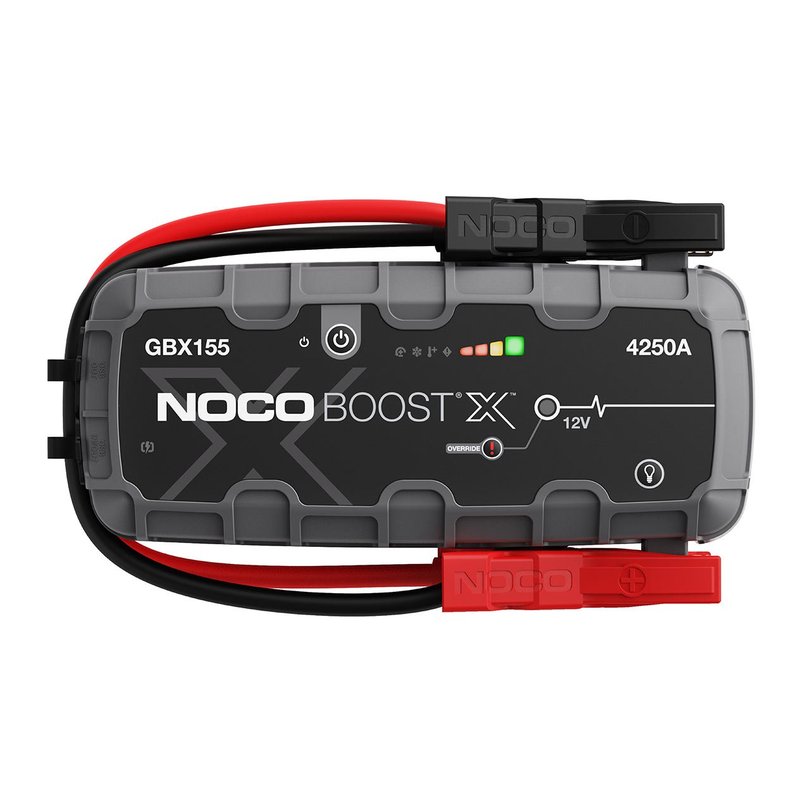
NOCO Boost X GBX155

NOCO’s GBX155 is the heavy-hitter in this list: the brand rates it for gas engines up to 10.0 liters and diesel up to 8.0 liters. Road & Track and Autoweek call it the most powerful pack they reviewed, TechGearLab names it best for big engines, and Popular Science lists it as its splurge pick.

Why it stands out

  • NOCO rates it at 4,250 peak amps for gas to 10.0L and diesel to 8.0L (brand-stated).
  • 99 Wh lithium battery with a 60W USB-C output, so it also charges a laptop.
  • IP65, with the spark-proof and reverse-polarity protection of the Boost line.
Engine ratingGas to 10.0L, diesel to 8.0L
Peak amps4,250A (brand-stated)
BatteryLithium-ion, 99 Wh
WeightAbout 5.8 lb
ExtrasIP65, 60W USB-C out, LED light

Good fit if

  • You drive a heavy-duty diesel pickup such as a 6.7L Power Stroke or Cummins.
  • You work on trucks, farm equipment or fleets and want one pack for all of them.

Skip it if

  • Your vehicles use 24V systems (common on loaders and heavy equipment) — this is a 12V pack.
  • You drive an ordinary car — you would be paying Premium prices for capacity you never use.

The GBX155 is just under the 100 Wh line that the FAA uses for spare lithium batteries in carry-on bags. That does not mean an airline will accept it; ask the airline before you fly.

Best with air compressor#4

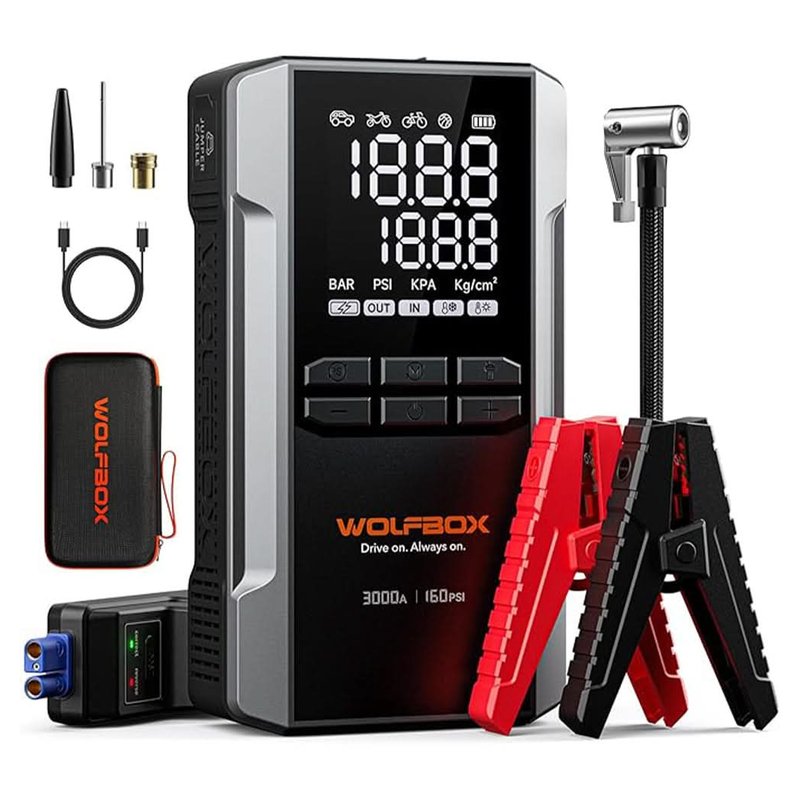
WOLFBOX MegaVolt16 Air

TechGearLab picks the MegaVolt16 Air as its best jump starter with an air compressor. It combines a pack that Wolfbox rates for gas engines to 8 liters with a 160 PSI inflator that stops at the pressure you set, so one box covers a dead battery and a low tire.

Why it stands out

  • Wolfbox rates it at 3,000 peak amps for gas to 8L and diesel to 6L (brand-stated).
  • Built-in 160 PSI compressor with auto shut-off (Wolfbox figure).
  • 59.2 Wh battery, IP64, 65W USB-C, and a 24-month warranty.
Engine ratingGas to 8L, diesel to 6L
Peak amps3,000A (brand-stated)
BatteryLithium-ion, 59.2 Wh
Weight3.12 lb
Extras160 PSI compressor with auto shut-off, IP64, 65W USB-C

Good fit if

  • You want a jump starter and a tire inflator in one bag.
  • You drive a car, SUV or gas pickup.

Skip it if

  • Your battery terminals are tight or recessed — TechGearLab found the clamps bulky.
  • You inflate tires often — a dedicated inflator is quicker.
Best for cold weather#5

HULKMAN Alpha 85S

HULKMAN built the Alpha 85S for cold climates. Its pre-heat feature warms the pack before it delivers full output, and HULKMAN markets it as able to start engines at -40°F. That is a brand claim we could not find independently tested, but no other pack here offers a built-in warm-up step.

Why it stands out

  • Pre-heat mode for very cold starts (brand feature and claim).
  • HULKMAN rates it at 2,000 peak amps; its pages list 8.0–8.5L gas and 5.0–6.0L diesel.
  • IP65 and 65W USB-C, which HULKMAN says recharges it in about an hour.
Engine ratingGas to 8.0–8.5L, diesel to 5.0–6.0L (brand lists both)
Peak amps2,000A (brand-stated)
BatteryLithium, 20,000 mAh
WeightNot listed by brand
ExtrasPre-heat for cold starts, IP65, 65W USB-C

Good fit if

  • Your winters regularly drop below 0°F and the pack has to live in the vehicle.
  • You drive a gas pickup or SUV.

Skip it if

  • Your winters are mild — a GB40 or GP2000 costs much less.
  • You want a single, consistent engine rating — HULKMAN publishes two.
Best for motorcycles & small engines#6

NOCO Boost Sport GB20

The GB20 is NOCO’s smallest Boost model, rated for gas engines up to 4.0 liters. That makes it a sensible match for motorcycles, ATVs, lawn tractors, small boats and compact cars, where a big truck-sized pack is more than you need. The Drive’s motorcycle guide names it the best overall jump starter for bikes.

Why it stands out

  • NOCO rates it at 500 peak amps for gas engines up to 4.0L; NOCO does not recommend it for diesel.
  • Same protection set as the GB40: spark-proof clamps and reverse-polarity protection (brand-stated).
  • IP65 with ports closed and about 2.1 lb, so it fits under a seat or in a tank bag.
Engine ratingGas to 4.0L (diesel not recommended)
Peak amps500A (brand-stated)
BatteryLithium-ion, 24 Wh
Weight2.1 lb
ExtrasIP65 (ports closed), USB out, LED light

Good fit if

  • You ride a 12V motorcycle, ATV or UTV, or run a riding mower.
  • Your car is a small four-cylinder and you want the lightest NOCO.

Skip it if

  • Your bike is a 6V vintage model — NOCO lists it for 12V lead-acid batteries only.
  • You drive a V6, V8 or any diesel — size up to the GB40 or GB70.
Best for the money#7

GOOLOO GP2000

The GP2000 is the most jump starter for the least money in this guide. GOOLOO rates it for gas engines up to 8.0 liters and diesel up to 6.0 liters, it weighs about 1.2 lb, and TechGearLab names it the best bang for the buck. The trade-off is fewer published specs than the bigger brands.

Why it stands out

  • GOOLOO rates it at 2,000 peak amps for gas to 8.0L and diesel to 6.0L (brand-stated).
  • About 1.2 lb, with two USB outputs and an LED light.
  • GOOLOO’s warranty of up to 30 months.
Engine ratingGas to 8.0L, diesel to 6.0L
Peak amps2,000A (brand-stated)
BatteryLithium
Weight1.2 lb
ExtrasTwo USB outputs, LED light

Good fit if

  • You want an emergency pack for a car or SUV at a Budget price.
  • You are buying several, one for each family car.

Skip it if

  • You want a published capacity and IP rating — GOOLOO’s US page lists neither.
  • You live somewhere very cold — GOOLOO’s own page gives two different temperature ranges.

Side by side

Compare the specs

Scroll sideways on a phone. Peak amps are brand-stated and not comparable between brands; the engine rating is the better guide.

Jump StarterBest forEngine ratingPeak ampsBatteryExtrasPrice range
NOCO Boost Plus GB40Best overallGas to 6.0L, diesel to 3.0L1,000A (brand-stated)Lithium-ion, 24 WhIP65 (ports closed), USB out, LED lightMid-rangeDetails ›
GOOLOO GT4000SBest value for big enginesGas to 12.0L, diesel to 10.0L4,000A (brand-stated)Lithium polymerIP65, 100W two-way USB-C, LCD screenMid-rangeDetails ›
NOCO Boost X GBX155Best for heavy-duty dieselGas to 10.0L, diesel to 8.0L4,250A (brand-stated)Lithium-ion, 99 WhIP65, 60W USB-C out, LED lightPremiumDetails ›
WOLFBOX MegaVolt16 AirBest with air compressorGas to 8L, diesel to 6L3,000A (brand-stated)Lithium-ion, 59.2 Wh160 PSI compressor with auto shut-off, IP64, 65W USB-CMid-rangeDetails ›
HULKMAN Alpha 85SBest for cold weatherGas to 8.0–8.5L, diesel to 5.0–6.0L (brand lists both)2,000A (brand-stated)Lithium, 20,000 mAhPre-heat for cold starts, IP65, 65W USB-CPremiumDetails ›
NOCO Boost Sport GB20Best for motorcycles & small enginesGas to 4.0L (diesel not recommended)500A (brand-stated)Lithium-ion, 24 WhIP65 (ports closed), USB out, LED lightBudgetDetails ›
GOOLOO GP2000Best for the moneyGas to 8.0L, diesel to 6.0L2,000A (brand-stated)LithiumTwo USB outputs, LED lightBudgetDetails ›

Want to see more than our seven picks?

Browse more jump starters ›

Not sure where to start?

Match the pack to your engine, not the biggest amp number. For most cars and crossovers, the NOCO GB40 covers gas engines up to 6.0 liters and fits in a glovebox. Current options and buyer feedback are on the product page.

How to choose

Five things that matter more than the amp number

Most disappointments come from a pack that was too small for the engine, stored somewhere too hot or too cold, or left uncharged.

01

Engine rating beats peak amps

Clore says peak amps have no industry-agreed definition, so one brand’s number is not another’s. The brand’s gas and diesel engine-size ratings are the more useful guide; give yourself some headroom for cold mornings and old batteries.

02

Lithium, lead-acid or capacitor

Lithium packs are light and fit a glovebox. Lead-acid boxes are heavy but, Clore says, handle repeated cranking and cold well. Ultracapacitor units shrug off cold but, per Clore, hold a charge for only about 10–15 days on their own.

03

Check the temperature range

Every pack lists an operating and storage range. NOCO’s FAQ for its Boost Max line gives -4°F to 122°F, while NHTSA says a car in the sun can heat up by 20 degrees in 10 minutes. Store the pack where it stays inside its range.

04

Protection you will actually use

Look for spark-proof clamps and reverse-polarity protection that refuse to boost until the clamps are on the right posts. Treat manual override as a last resort: NOCO says it switches both protections off.

05

Extras that earn their space

USB-C charging, a charge screen and an LED light are worth having. A built-in compressor is useful if you carry nothing else. An IP rating matters for boats and truck beds; IP65 means protected against water jets, not immersion.

FAQ

Portable jump starters: questions answered

Straight answers to the questions people ask before buying, drawn from AAA, the FAA, owner’s manuals and the brands’ own guidance.

Are jump starters worth it?5

Are portable jump starters worth it?

Yes, for most drivers. AAA handled about 7 million battery calls in 2024, and a pack lets you start the car yourself in minutes instead of waiting for help or finding another car. It is not a fix for a failing battery, but it gets you to a shop. If you already have roadside cover and rarely drive far from home, the case is weaker.

How does a portable jump starter work?

It is a compact battery (usually lithium) that delivers a short, high-current burst through clamps attached to your car’s battery, enough to turn the starter motor. Once the engine runs, the alternator takes over and recharges the car battery as you drive. Clore notes lithium units disconnect automatically when they sense alternator output.

Do jump starters work on a completely dead battery?

Often, but not always. NOCO says the GB40 jump starts batteries down to 2 volts; below that it needs manual override, which turns off its safety protections. Interstate Batteries says a battery may be too dead to jump if the dashboard lights fade within 60 seconds. A battery with a failed cell may not start at all.

Are jump starters better than calling roadside assistance?

They solve different problems. A jump starter handles the most common call, a flat battery, on your schedule. Roadside cover also handles tows, lockouts and flat tires. AAA membership prices vary by regional club, roughly $65–$79 a year for the basic tier at the two clubs we checked. Many drivers keep both.

Are cheap jump starters any good?

Some are. TechGearLab names the Budget-tier GOOLOO GP2000 its best bang for the buck. The catch is thinner documentation: cheaper packs often skip capacity, IP rating or temperature range on the spec sheet. Clore also says many lithium packs work fine at room temperature but poorly in the cold, often because of cost-cutting.

Want the safe all-round choice? Our best overall pick suits most cars and SUVs.See details
Sizing & amps5

How many amps does my jump starter need?

Go by the brand’s engine rating first. As a rough guide, Consumer Reports (crediting Lectron) suggests about 800–1,200 peak amps for engines up to 2.0L, 1,200–2,000 for 2.0–3.0L, 2,000–3,000 above 3.0L, and at least 3,000 for diesels. Add headroom if you live somewhere cold or your battery is old.

What is the difference between peak amps and cranking amps?

Peak amps are the brief maximum a pack can push; Clore says the figure has no industry-agreed definition. Cranking amps are a Battery Council International rating: current a battery can hold for 30 seconds at 32°F above 7.2 volts. Clore rates its lithium packs in start-assist amps, a 3-second version of that test.

Why is the diesel rating lower than the gas rating?

Diesels are harder to crank. NAPA says diesel compression ratios are almost twice those of gasoline engines, and many diesel trucks carry two batteries for that reason. That is why NOCO rates the GB40 for 6.0L gas but only 3.0L diesel. If you drive a diesel, shop by the diesel number.

Can a 12V jump starter start a 24V truck?

No. A 12V pack is for 12V systems, which covers nearly all cars, pickups and SUVs. Progressive Dairy says many loaders and heavy equipment run 24V, and those need a pack with a 24V mode, such as NOCO’s GB500 or Clore’s ES1224. Ram’s diesel manual also warns never to use a booster above 12 volts on its trucks.

Is a bigger jump starter always better?

Not necessarily. A bigger pack weighs more, costs more and is more likely to stay in the garage. The useful extra is headroom: a pack rated above your engine size has more margin on a cold morning. AstroAI says a pack delivers roughly 70% of its rated output at 0°F.

Driving something big? This pack covers heavy-duty diesels.View options
Using it safely5

Red or black clamp first?

Red first. Connect the red clamp to the positive (+) battery post, then the black clamp to ground, and remove them in reverse: black first. NOCO’s guide allows the negative post or the chassis for its packs, while Kia, Toyota, Honda and AAA specify bare metal away from the battery. Follow your pack’s and car’s manuals.

How do I use a portable jump starter?

Turn off the ignition and accessories, attach red to positive and black to ground, switch the pack on, wait for the ready light, then start the car. NOCO says some vehicles need the pack connected for up to 30 seconds first. Once the engine runs, switch the pack off and remove black, then red.

How long should I wait between attempts?

Follow your pack’s manual, because brands differ. NOCO says wait 20–30 seconds between tries and make no more than five in 15 minutes. Clore recommends 6 seconds of cranking, then 3 minutes of rest. Ram’s diesel manual limits cranking to 15 seconds with two minutes between attempts.

What does manual override or boost mode do?

It forces the pack to send power when it cannot detect a battery, usually because the battery is almost completely flat. NOCO warns that on the GB40 this disables both spark-proof and reverse-polarity protection. Use it only exactly as your manual describes, with the clamps on the correct posts.

Why won’t my jump starter start my car?

Common causes: the pack is low on charge, a clamp has a poor grip on a corroded post, the battery is too flat for the pack to detect, or the problem is not the battery at all. AAA says if the engine dies again with the charging light on, another jump won’t help; have the charging system checked.

Curious how owners get on with clamp fit and the ready light?Read buyer reviews
Charging & storage5

Do jump starters come charged?

Partly. NOCO says the GB40 ships partially charged and must be fully charged before use, which takes about 3 hours on a 2-amp USB charger. Charge any new pack fully before you rely on it, then check the level every few months.

How often should I recharge a jump starter?

Brands disagree, so follow yours. Clore, GOOLOO and AstroAI say every 3 months. NOCO’s FAQ text says every 4–6 months, and a NOCO-sponsored article says every 6. Recharge after every jump too, and more often in extreme cold: Clore suggests monthly in extreme weather.

How long does a jump starter take to charge?

It depends on the pack and the charger. NOCO lists about 3 hours for the GB40 on a 2-amp USB charger and 12 hours on a 0.5-amp one. GOOLOO says the GT4000S recharges in about 1.2 hours over its 100W USB-C port. Lead-acid boxes take much longer on a wall charger.

Is it safe to keep a jump starter in a hot car?

Check the storage range first. NHTSA says a car can heat up by 20 degrees in 10 minutes, and Consumer Reports cites NHTSA figures of 131–172°F in direct sun. NOCO’s FAQ for its Boost Max line lists 122°F as the upper storage limit. In hot climates, keep the pack in the shaded cabin, not on the dash, or bring it inside.

Can I leave a jump starter in the car in winter?

Yes, within its range. Cold drains output: Wolfbox says a lithium cell may give 50% or less of its rated capacity at -4°F. Clore suggests bringing a pack indoors when overnight lows drop below about -20°F and letting it warm for an hour before charging. Keep it in the cabin rather than the trunk.

Want a pack that warms itself before a cold start?See details
Travel & other vehicles5

Can I take a jump starter on a plane?

The FAA and TSA do not name jump starters; their spare lithium battery rules apply. Packs up to 100 Wh may go in carry-on bags only; 101–160 Wh needs airline approval; over 160 Wh is forbidden. Protect the terminals, and ask your airline first, because airlines can be stricter and the TSA officer has the final say.

Can I use a car jump starter on a motorcycle?

Usually, if the bike is 12V and the pack is small. NOCO markets its GB20 for motorcycles. Read your bike’s manual first: Harley-Davidson says it does not recommend jump-starting a motorcycle, and it warns to ground the negative clamp away from the battery, never on painted or chrome parts.

Can you jump start a hybrid or electric car?

You can usually jump the 12V battery, never the high-voltage pack. Toyota’s Prius manual points to a dedicated jump terminal, and Tesla’s manuals describe a portable jump starter as the power source. Toyota, Kia and Tesla all say their hybrids or EVs must not be used to jump another vehicle.

Can I jump start a boat with a portable jump starter?

Yes, if the starting battery is 12V. BoatUS counts dead batteries among the top reasons boats get towed and suggests carrying a small jump pack. Pick an IP-rated pack, keep it in a dry locker, and remember IP65 means protected against water jets, not submersion.

Will a jump starter work on a golf cart or a 6V classic car?

Usually not. Many golf carts run 48V packs, far beyond a 12V jump starter. NOCO’s FAQ says jump starting a 6V battery with its packs could be extremely dangerous. For 6V vehicles, use a starter or charger made for 6V, such as Schumacher’s plug-in charger/engine starter.

Riding or mowing? This is the small pack NOCO markets for bikes and ATVs.See details
Jump starter vs the alternatives5

Jump starter vs jumper cables: which is better?

A jump starter does not need a second car, which is its main advantage. Interstate Batteries also notes a car-to-car jump can damage the donor car if voltage spikes. Jumper cables cost less and never need charging, but you need someone willing to help. Many drivers carry a pack and keep cables as a backup.

Can a jump starter charge a car battery?

No. Interstate Batteries says plainly that a jump starter cannot recharge a dead car battery, and Clore’s answer is “not really.” A pack provides a burst to start the engine; the alternator or a proper battery charger does the recharging. A battery that keeps going flat needs testing.

Jump starter vs battery charger vs maintainer?

A jump starter is for emergencies; CTEK calls it a reactive device. A battery charger restores a discharged battery over hours. A maintainer, per O’Reilly, gives a small charge only when voltage drops, so it can stay connected through storage. Battery Tender notes a basic trickle charger can overcharge if left on indefinitely.

Can a portable power station jump start a car?

Generally no. Oukitel, which makes power stations, says its 12V outlets supply a steady 2–10 amps, while a jump start needs a burst of hundreds of amps. A power station can slowly charge a partly drained battery, but it is not a substitute for a jump starter.

Is a jump starter with an air compressor worth it?

If you carry nothing else, yes. One box covers a dead battery and a soft tire. TechGearLab picks the Wolfbox MegaVolt16 Air, with a 160 PSI inflator, as its best combo. The trade-offs: a combo is bigger than a basic pack, and a dedicated inflator is usually quicker.

Want one box for batteries and tires?Browse compressor combos
Buying & lifespan5

How long do portable jump starters last?

There is no published lifespan for mainstream lithium packs; NOCO, GOOLOO and AstroAI do not give one. Clore calls a jump starter a perishable good and says leaving a unit discharged is the worst thing you can do. Clore owners report lead-acid JNC660 boxes lasting decades with replacement batteries.

What warranty should I expect?

It varies a lot. NOCO and Clore offer one year. GOOLOO advertises up to 30 months, AstroAI up to 3 years, and Wolfbox 24 months on the MegaVolt 10Air and 42 months on the MegaVolt 24Air. Check what the warranty requires, such as registering the product or buying from an authorized seller.

How much should I spend on a jump starter?

Match the tier to your engine. A Budget-tier pack (under $90) covers most cars. Mid-range packs ($90–$200) add bigger diesel ratings, faster USB-C charging and screens. Premium packs (over $200) are for heavy-duty diesels, extreme cold or professional use.

NOCO or GOOLOO: which brand is better?

NOCO has the longer review record: its GB40 is the most-cited pick across the roundups we read. GOOLOO gives bigger engine ratings and longer warranties per dollar, and Outdoor Life names the GT4000S best for diesel trucks. NOCO publishes more detailed specs; GOOLOO’s GT4000S recharges faster than NOCO’s GB40.

How do I know if my car battery is the problem?

AAA’s warning signs include a slow crank, clicking when you turn the key, dim headlights, a battery warning light, a sulfur smell, a bulging case and frequent jump-starts. AAA puts typical battery life at 3–5 years and recommends a yearly test from the third year.

Need the most rating for the least money?Check options & availability

How we pick

How this guide is put together

  • We compare each brand’s published specifications: engine ratings for gas and diesel, battery chemistry and size, temperature range, IP rating and extras.
  • We read owner’s manuals (Toyota, Tesla, Ram, Kia, Honda, Harley-Davidson), guidance from AAA, the FAA and NHTSA, and independent reviews that tested the packs.
  • We credit third-party test results by name and say when brands publish conflicting figures.
  • We do not bench-test, accept free products or take payment for placement.

What a jump starter can and cannot do

A jump starter gives a short burst to crank the engine. It does not recharge a dead battery, and it cannot fix a failed battery, starter or alternator. If a battery is cracked, leaking, swollen or frozen, do not jump it.

Read how we pick →

Your engine, your weather, your storage spot: pick for all three

Choose a pack rated above your engine size, keep it charged and stored inside its temperature range, and learn the clamp order before you need it. If you are unsure, start with our best overall pick.