
Best Portable Jump Starter · Cold Weather

Best Portable Jump Starter for Cold Weather

For cold weather, choose a pack with a stated low-temperature limit below your coldest mornings, and keep it in the cabin: our top pick is the HULKMAN Alpha 85S, which adds a pre-heat step before a cold start. Cold hits twice. AAA says a car battery loses about 60% of its strength at 0°F, and lithium jump starters lose output too; Wolfbox says a lithium cell may give half its rated capacity or less at -4°F.

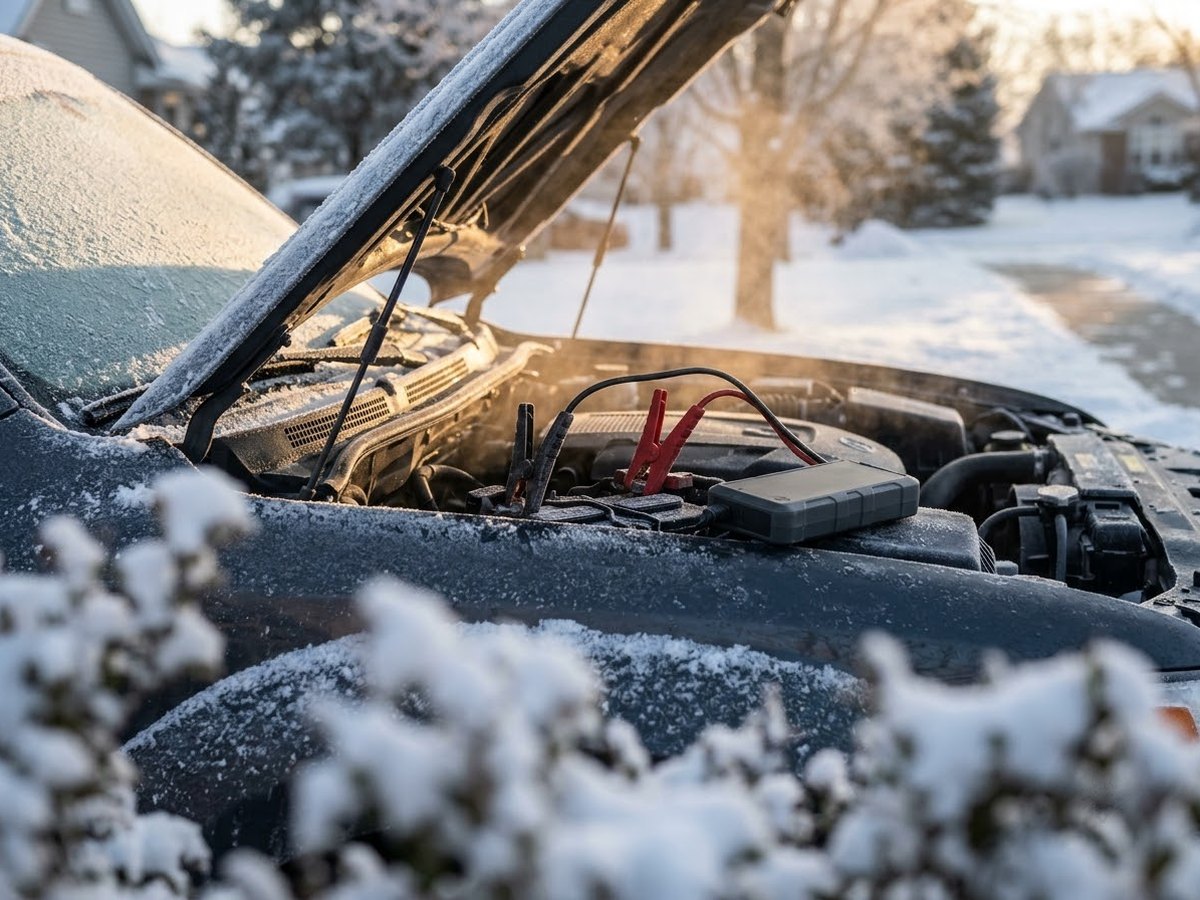
Frosted SUV hood raised in a snowy driveway with a jump starter clamped to the battery at first light

Our top 3

Top picks at a glance

Best for deep cold#1
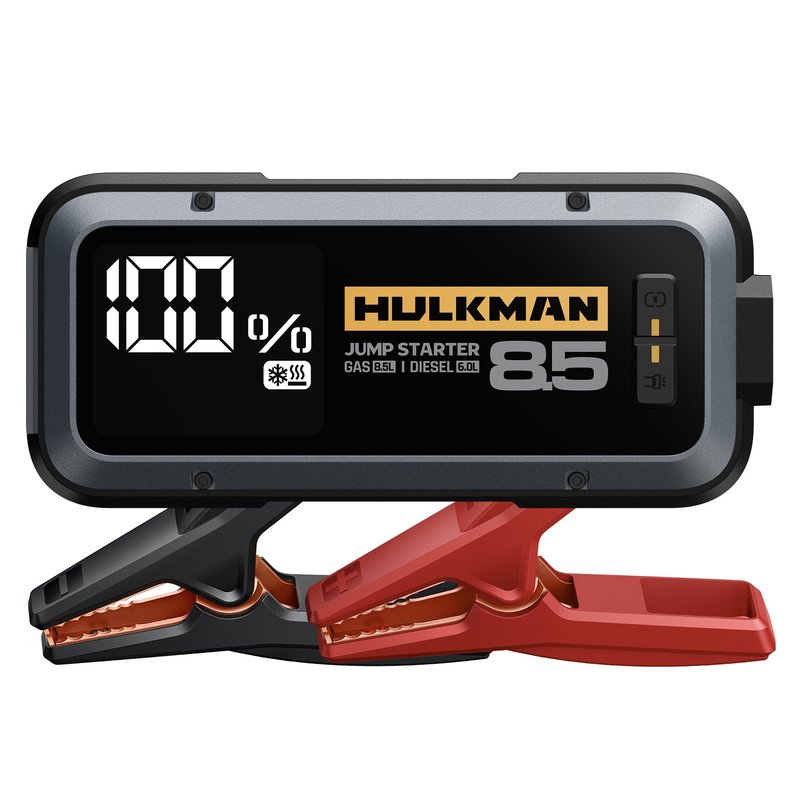
HULKMAN Alpha 85S jump starter

HULKMAN Alpha 85S

Premium price range

A pre-heat mode warms the pack before it delivers full output; HULKMAN claims starts down to -40°F.

View specs ›
Best lithium from a pro brand#2
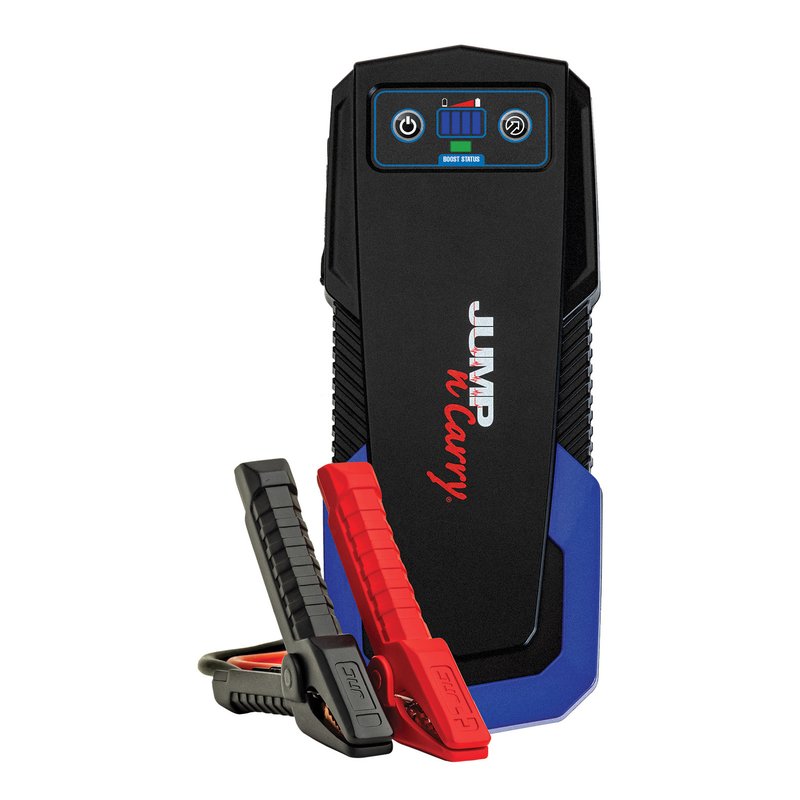
Clore Jump-N-Carry JNC325 jump starter

Clore Jump-N-Carry JNC325

Mid-range price range

Clore says it works on V8 passenger vehicles down to -10°F; Car and Driver’s best overall.

View specs ›
Best lead-acid for winter#3
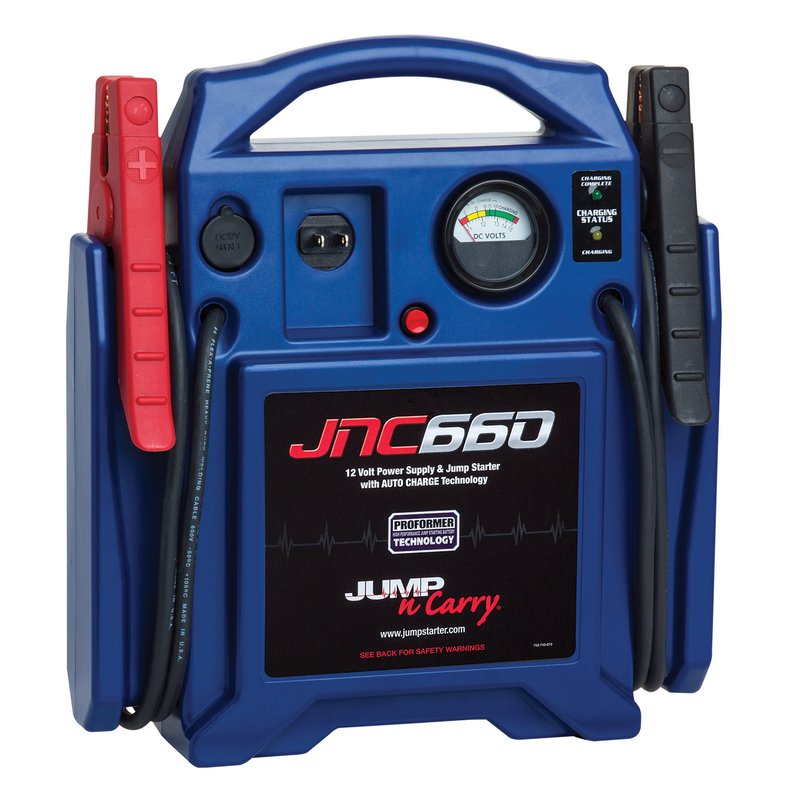
Clore Jump-N-Carry JNC660 jump starter

Clore Jump-N-Carry JNC660

Mid-range price range

Clore says lead-acid performs well in cold; AAA South Jersey’s roadside expert suggests this jump box.

View specs ›

In detail

Who each one suits

Engine ratings, amps and capacities are each brand’s own figures; third-party test results are credited by name. We did not bench-test these units.

Best for deep cold#1

HULKMAN Alpha 85S

HULKMAN built the Alpha 85S for cold climates. Its pre-heat feature warms the pack before it delivers full output, and HULKMAN markets it as able to start engines at -40°F. That is a brand claim we could not find independently tested, but no other pack here offers a built-in warm-up step.

Why it stands out

  • Pre-heat mode for very cold starts (brand feature and claim).
  • HULKMAN rates it at 2,000 peak amps; its pages list 8.0–8.5L gas and 5.0–6.0L diesel.
  • IP65 and 65W USB-C, which HULKMAN says recharges it in about an hour.
Engine ratingGas to 8.0–8.5L, diesel to 5.0–6.0L (brand lists both)
Peak amps2,000A (brand-stated)
BatteryLithium, 20,000 mAh
WeightNot listed by brand
ExtrasPre-heat for cold starts, IP65, 65W USB-C

Good fit if

  • Your winters regularly drop below 0°F and the pack has to live in the vehicle.
  • You drive a gas pickup or SUV.

Skip it if

  • Your winters are mild — a GB40 or GP2000 costs much less.
  • You want a single, consistent engine rating — HULKMAN publishes two.
Best lithium from a pro brand#2

Clore Jump-N-Carry JNC325

Clore makes the Jump-N-Carry boxes found in many repair shops, and the JNC325 is its lithium pack for drivers. Car and Driver names it best overall. Clore rates it in “start assist amps” rather than peak amps, so its 450 figure is not comparable to the big numbers on other boxes.

Why it stands out

  • Clore rates it for gas engines up to 8L and diesel up to 6L, and says it works on V8 passenger vehicles down to -10°F.
  • Meets UL 2743, the safety standard for portable power packs (Clore statement).
  • Heavy #6 AWG cables plus USB and 12V outlets.
Engine ratingGas to 8L, diesel to 6L
Peak amps450 start-assist amps (Clore rating)
BatteryLithium
Weight4.3 lb
ExtrasUL 2743, #6 AWG cables, USB and 12V outlets

Good fit if

  • You want a pack from a professional-tool brand with a conservative rating.
  • You need cold-weather performance without Premium pricing.

Skip it if

  • You want the smallest, lightest pack — at 4.3 lb it is heavier than the GB40.
  • You want a built-in screen showing the exact charge.
Best lead-acid for winter#3

Clore Jump-N-Carry JNC660

The Jump-N-Carry JNC660 is the classic shop jump box: a sealed lead-acid battery, 46-inch heavy cables and an 18 lb case. Outdoor Life calls it the best for pros, and Clore owners report these units lasting many years with battery replacements. It is the pick for a garage or service truck, not a glovebox.

Why it stands out

  • Clore rates it at 1,700 peak and 425 cranking amps.
  • 46-inch #2 AWG welding-cable leads reach awkward battery locations.
  • Built-in automatic charger, a 12V outlet for accessories, and a replaceable battery.
Engine ratingFour-cylinder cars to large diesel (reviewer description)
Peak amps1,700 peak / 425 cranking amps
BatterySealed lead-acid
Weight18 lb
Extras46-inch #2 AWG cables, built-in charger, 12V outlet

Good fit if

  • You run a shop, farm or fleet and jump vehicles often.
  • You want long cables and a box that can be rebuilt instead of replaced.

Skip it if

  • You want something to keep in a car — 18 lb is too heavy.
  • You will not keep it charged — Clore says lead-acid boxes need regular recharging.

Below zero where you live?

A pack built for cold, stored in the cabin and kept charged, is far more likely to work on the morning you need it.

See ratings & reviews ›

Tips

Three things that make the difference

01

Store it in the cabin, not the trunk

Wolfbox says trunk temperatures match the outside air in extreme cold. The cabin is usually less cold, and the pack is within reach.

02

Warm a cold pack before retrying

Wolfbox suggests warming a cold unit indoors for 10–15 minutes before retrying. Clore says to bring a pack inside when overnight lows drop below about -20°F.

03

Charge more often in winter

Clore recommends charging every 30–45 days in extreme temperatures instead of every 90, and letting a cold pack reach room temperature for about an hour before charging.

Honest note

HULKMAN’s -40°F figure is a brand claim we could not find independently tested. In Consumer Reports’ archived tests, none of the units could jump a weak battery when both the car and the pack were cooled to 0°F. In deep cold, a warm pack and a healthy battery matter as much as the model.

FAQ

Questions people ask

Do jump starters work in cold weather?

Yes, within limits. Most lithium packs list a minimum around -4°F, and output drops as it gets colder; AstroAI says roughly 70% of rated output at 0°F. Consumer Reports’ archived tests found no unit could jump a weak battery with car and pack cooled to 0°F. Keeping the pack warm makes a big difference.

What is the best type of jump starter for extreme cold?

Clore says lead-acid jump starters perform well in cold, and ultracapacitor units are largely unaffected by it but hold a charge only about 10–15 days on their own. Some packs add a pre-heat function, as HULKMAN’s Alpha 85S and Clore’s ES580 and JNC318 do.

How cold is too cold for a lithium jump starter?

It varies by model. Wolfbox lists -4°F as the MegaVolt24 minimum, while Clore rates its lithium JNC345 down to -23°F and the JNC325 to -10°F. Check your pack’s stated range and do not charge it below the brand’s charging limit.

Should I keep my jump starter in the car in winter?

Yes, if it stays within its range and you can bring it inside on the coldest nights. Clore says to bring a pack indoors when lows drop below about -20°F. Keep it in the cabin rather than the trunk, as Wolfbox suggests.

Why does my car battery die in cold weather?

Cold slows the battery’s chemistry while thickened oil makes the engine harder to turn. AAA says a battery is about 35% weaker at 32°F and loses about 60% of its strength at 0°F. An older battery is more likely to fail on the first hard freeze.

Can I jump a frozen battery?

No. AAA and Kia’s manual both warn never to jump a frozen battery, and Ram’s diesel manual says a frozen battery could rupture or explode. Bring the battery above freezing first, or have it replaced.

Pick for your coldest morning, not an average one

Want the full picture? See our best portable jump starter guide, compared by engine size and use, and the FAQ on charging, storage and safe use.