
For most drivers, yes. A portable jump starter lets you restart a car with a flat battery on your own, in a few minutes, without a second car or a wait for roadside help. Battery trouble is one of the most common reasons people get stranded: AAA says it handled about 7 million battery-related calls in 2024. A compact lithium pack that fits in the glovebox turns many of those calls into a short delay.
It is not a cure-all. A jump starter gives a short burst of power to crank the engine; it does not recharge a flat battery, and it cannot fix a battery that has failed, a bad starter or a dying alternator. It also has to be charged to be useful, so it only pays off if you top it up every few months. If you drive a newer car close to home and already have roadside cover, the case is weaker.
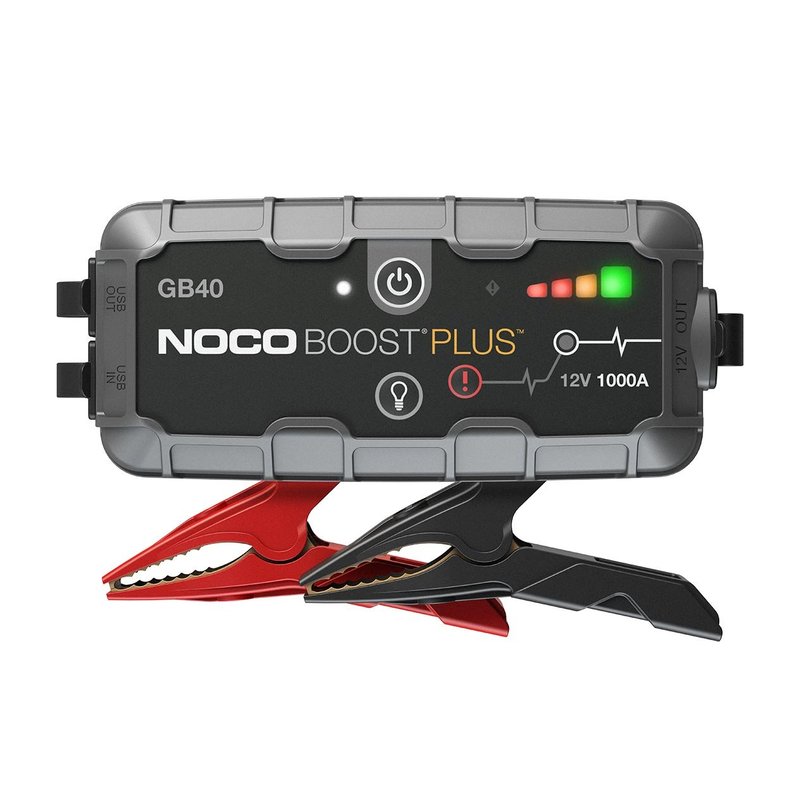
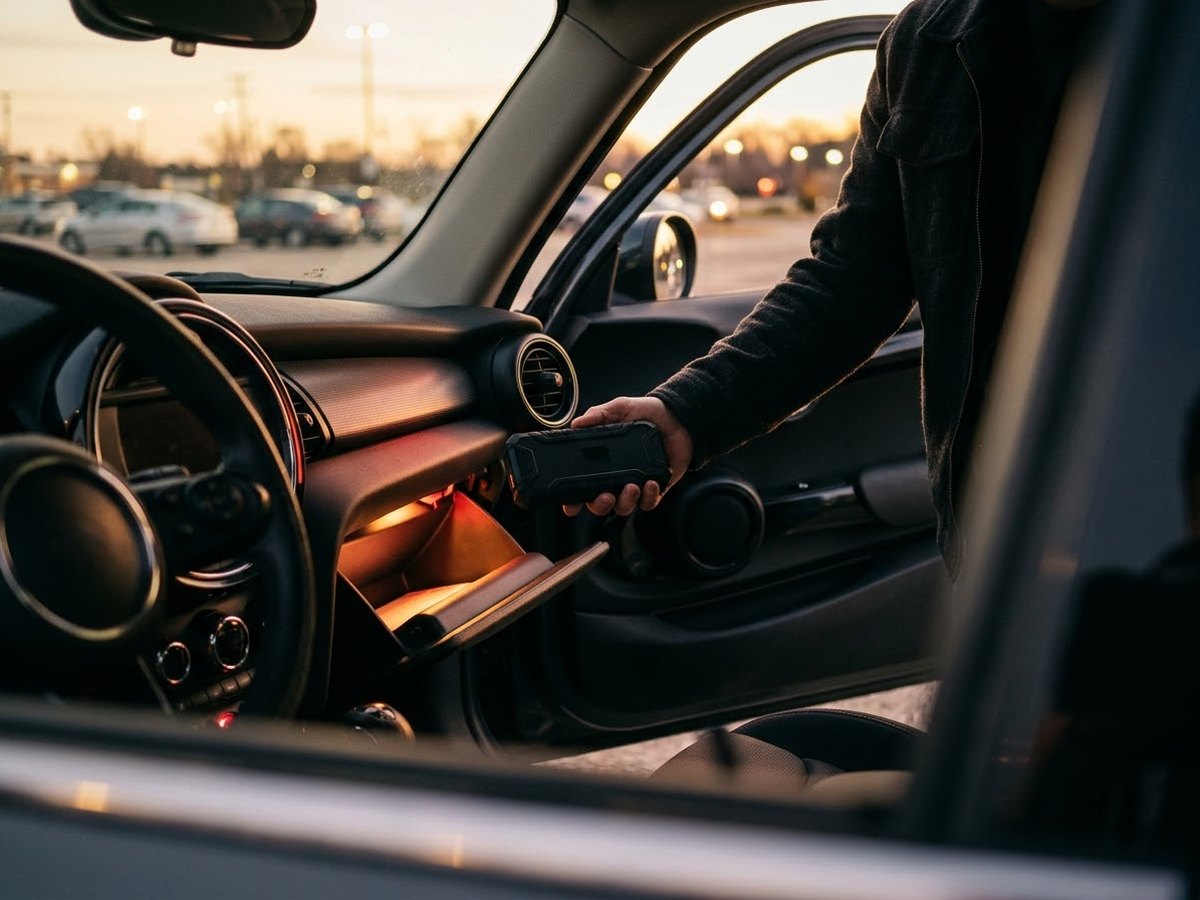
What a portable jump starter actually does
A portable jump starter is a compact battery pack with a pair of clamps. You attach the clamps to your car’s battery, switch the pack on and start the engine as usual. The pack adds a short, high-current burst that helps the weak battery turn the starter motor. Once the engine runs, the alternator takes over and starts recharging the car battery as you drive.
Most packs sold today are lithium-based; Wolfbox puts typical lithium packs under 2 lb. Professional jump boxes, like the ones many repair shops use, are heavier lead-acid units. Clore Automotive, which makes the Jump-N-Carry shop boxes, notes that its lithium units disconnect automatically once they sense the alternator is working, while lead-acid units have to be disconnected promptly by hand.
What a jump starter can and cannot do
- Can: start an engine whose battery is too weak to crank, without a second vehicle.
- Can: charge a phone or tablet over USB, on most lithium models.
- Cannot: recharge a dead battery. Interstate Batteries says plainly that a jump starter cannot recharge a dead car battery.
- Cannot: revive a battery with a failed cell, or fix a starter or alternator problem.
That last point matters. If your car starts after a jump but dies again, AAA says another jump-start won’t help when the charging-system warning light stays on; that points to a charging problem, not a flat battery.
How a jump starter compares with the alternatives
There are three common ways to deal with a flat battery on the road. Each has a place.
| Option | What you need | Main advantage | Main drawback |
|---|---|---|---|
| Portable jump starter | A charged pack | No second car; you can do it alone in minutes | Must be kept charged and stored within its temperature range |
| Jumper cables | A second running car | Cheap and never needs charging | Needs a helper; Interstate Batteries notes a car-to-car jump can damage the donor car if voltage spikes |
| Roadside assistance | A membership or a phone call | Also covers tows, lockouts and flat tires | You wait, and coverage costs a yearly fee |
Roadside cover and a jump starter are not either-or. AAA membership prices vary by regional club: AAA Northern California, Nevada and Utah lists its Classic tier at $79 a year, while AAA Central Penn lists $65 plus a one-time enrollment fee. AAA Northern California, Nevada and Utah includes battery jump-start service at every level. A jump starter is a one-time purchase that handles the most common problem on your own schedule; a membership covers the rest.
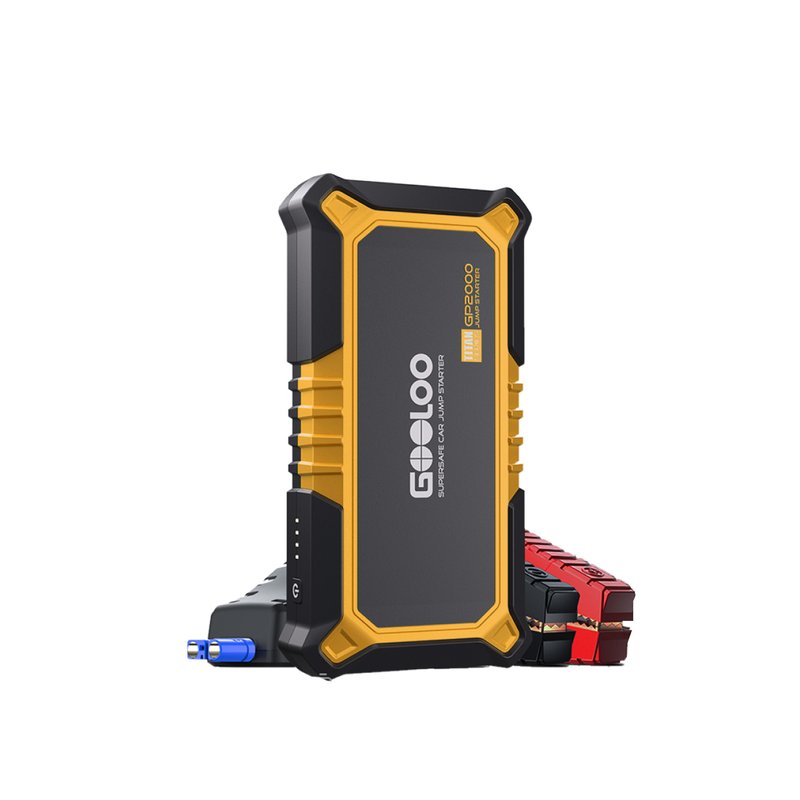
Most rating for the least money · Budget price range
GOOLOO GP2000
GOOLOO rates the GP2000 for gas engines up to 8.0 liters and diesel up to 6.0 liters at about 1.2 lb, and TechGearLab names it its best bang for the buck. It is a Budget-tier way to keep one in every car.
Check options & availability ›Who gets the most out of owning one
Some drivers benefit far more than others. A jump starter earns its place in the car if any of these sound familiar:
- Your battery is three or more years old. AAA puts typical battery life at three to five years, and about three years in hot climates, and recommends a yearly test once a battery reaches its third year.
- You live where winters are hard. AAA says a car battery is about 35% weaker at 32°F and loses about 60% of its strength at 0°F.
- A car, boat or bike sits unused for weeks. AAA Club Alliance lists going more than two weeks without starting the engine as a risk factor, and BoatUS notes boat batteries are often dead after weeks or months unused.
- You drive long distances, alone, or in remote areas, where finding a second car or waiting for help is harder.
- You own several vehicles, including a mower, ATV or motorcycle that all run on 12V batteries.
If you drive a newer car, mostly in town, with roadside cover and a battery under three years old, you may rarely need one. It is still cheap insurance, but it is a convenience rather than a necessity.
What makes one worth the money
A jump starter is only worth buying if it works on the morning you need it. Four things decide that.
- A rating that covers your engine. Brands publish gas and diesel engine-size ratings. Clore says peak amps have no industry-agreed definition, so the engine rating is the better guide. Choose a pack rated above your engine to leave headroom.
- Real protection. Look for spark-proof clamps and reverse-polarity protection. NOCO says the GB40 will not boost if the clamps are reversed; it shows an error light until you fix the connection.
- A temperature range that suits where it lives. Every pack lists one. NHTSA says a parked car can heat up by 20 degrees in 10 minutes, and a pack left outside its range may not work or may age faster.
- A charging habit. Clore, GOOLOO and AstroAI recommend topping up stored packs every three months, while NOCO’s FAQ text says every 4–6 months. A pack left flat in a drawer is worth nothing.
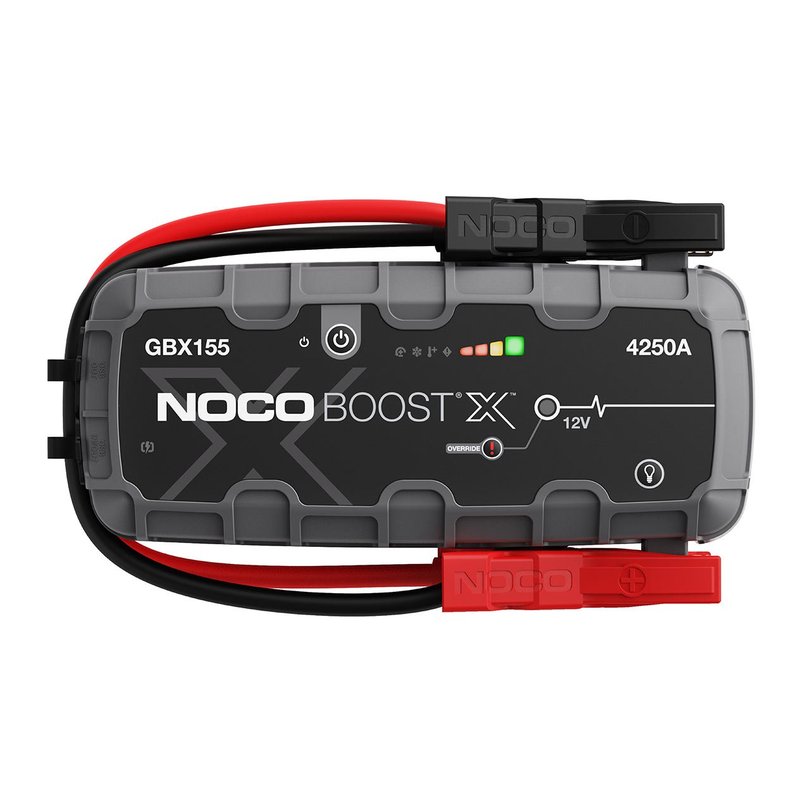
For heavy-duty diesels · Premium price range
NOCO Boost X GBX155
If you drive a big diesel pickup, NOCO rates the GBX155 for diesel engines up to 8.0 liters. Road & Track and TechGearLab single it out for large engines.
See today’s price ›Honest note
A jump starter can make you complacent about an ageing battery. If you find yourself using it more than once or twice in a season, AAA’s advice applies: frequent jump-starts are a clear sign the battery is struggling. Have it tested, and replace it before it leaves you stranded somewhere the pack can’t help.
Common doubts, answered
People who hesitate to buy a jump starter usually have one of three worries.
- “Will it work on a completely dead battery?” Often. NOCO says the GB40 jump starts batteries down to 2 volts; below that it needs manual override, which NOCO warns disables its spark-proof and reverse-polarity protection. Interstate Batteries says a battery may be too dead to jump if the dashboard lights fade within 60 seconds.
- “Is it safe to keep in the car?” Within the brand’s storage range, yes. NOCO’s FAQ for its Boost Max line gives -4°F to 122°F. In hot climates, keep the pack in a shaded spot in the cabin or bring it inside.
- “Will I remember how to use it?” The basic order is simple: red clamp to the positive post, black clamp to ground, switch on, start, then remove black first. Read the manual once when the pack arrives, not on the roadside.
For most drivers, those answers tip the balance: a modest, one-time cost buys independence from the most common breakdown there is.
Questions people ask
Are portable jump starters any good?
The better ones are. The NOCO GB40 is the most-cited pick across the roundups we read, and outlets such as Car and Driver, Outdoor Life and TechGearLab have tested a range of packs. Results vary most in cold weather and with very flat batteries, so buy a pack rated above your engine size.
Is a jump starter better than jumper cables?
For most people, yes, because it does not need a second car. Interstate Batteries also notes a car-to-car jump could damage the donor car if voltage spikes. Cables cost less and never need charging, so many drivers keep both.
Can a jump starter replace roadside assistance?
Only for flat batteries. Roadside cover also handles tows, lockouts and flat tires. AAA Northern California, Nevada and Utah includes battery service at every tier, and prices vary by club, roughly $65–$79 a year for the basic tier at the two clubs we checked.
How long does a jump starter hold its charge?
Brands differ. Clore says lithium jump starters hold a charge up to 12 months, and a NOCO FAQ says its Boost Max line keeps 70% of capacity for up to a year. Most brands still recommend recharging every three to six months.
Do I need a big jump starter for a small car?
No. Match the pack to your engine. NOCO rates the compact GB40 for gas engines up to 6.0 liters, which covers most four- and six-cylinder cars. A bigger pack adds weight and cost without helping a small engine start.
Read first: best portable jump starter · best jump starters for the money
Sources: AAA Newsroom: 2024 roadside calls · AAA: When to replace your car battery · Interstate Batteries: How to use a jump starter · Clore Automotive: Peak amps don’t tell the whole story · NHTSA: Hot car safety advisory · NOCO: Boost Plus GB40
This article is general information, not professional automotive or electrical advice. Always follow the instructions that came with your jump starter and your vehicle’s owner’s manual; if a battery is cracked, leaking or swollen, do not jump it.